Showing posts with label books on law enforcement. Show all posts

Monday, June 19, 2017

More than just Socks, Creating Positive Presence

Our apologies in advance as both Sarah and I recognize it's been far too long since we last fed our "blog", but as is the case for many of us with the best of intentions, sometimes life and circumstance just get in the way. With that said, things seem to have quieted down enough for us to push out another excerpt from our upcoming book, this time from Chapter 6 which talks about things that influence us and sometimes guide our actions. You may find this post is perhaps more practical then introspective, but we hope just as meaningful.

Experience has taught me that our lives and behaviours are very much influenced by the compulsions we feel to adhere to the influences of the society we are born into. Understanding how these influences affect behaviour can be like unleashing our inner Jedi and for an experienced investigator the key to unlocking invaluable knowledge to help in apprehending “bad guys” or resolving crisis and conflict.

Take the influence of likability for instance, being likeable goes a long way towards influencing positive outcomes. It makes sense, how difficult is it to listen to someone we don’t like, let alone be persuaded or influenced by them? Professor, author and psychologist Robert Cialdini spoke to this point in his video The Science of Persuasion. According to Cialdini there are three important factors that increase likability:

  • People who are similar to us.
  • People who pay us compliments.
  • People who cooperate with us.

Citing a study that speaks to these factors, Cialdini said that researchers found that business persons who met with perspective business associates were ninety percent more likely to close the deal if both sides spent some time getting to know the other side on a personal level through connection and communication. This was in fact a forty percent increase from those in the study who approached the same scenario with the attitude that time was money so let's get down to business.   

From my own experiences as an investigator, I believe Cialdini's three factors do increase likability, but I would also add a fourth: the ability to laugh at oneself and use self-deprecating humour. I believe these four elements are key to influencing likability and building those important connections with other people. 
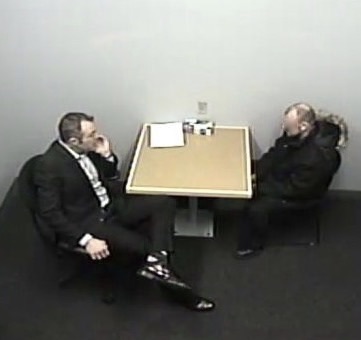
Rapport building.


In TV and movies a prevalent interview tactic is the "good cop/bad cop” routine. The idea being that a suspect will draw quickly away from the unlikable “bad cop”, but will then draw closer to the likeable “good cop.” This may make sense as it does exploit the likability influence, however, in my view this is a tact that most investigators stay away from and with good reason. Statement admissibility will be judged in part on the treatment of the accused by all police officers they came in contact with prior to he/she ever making admissions or statements in an interview. If in this scenario the "bad cop” is too bad, too overbearing, or even threatening, there is a likelihood that any statements made by the suspect to the more likeable officer could be in jeopardy. If the Court identifies threats, coercion or inducements that may have come through in the bad cop’s role, the statements may be dismissed. So instead, most interviewers take a different approach and work on proper rapport building, seeking out that commonality, being empathetic to the accused’s plight, actually listening, and focusing on building a connection to the suspect, thus staying clear of any land mines the "bad cop" act can create.

Humour in this phase can also be used in creating a less adversarial and more likeable environment for statement taking. One such officer I know is an expert at this. Through discussions around his receding hairlines, his pot belly and his commentary of not missing too many meals, his expressions and tone build likability quickly and even the most seasoned of criminals are persuaded to at least listen to him in the interview suite.

Something light-hearted on a
really bad day can go a very long way.
For me, I have found that having a simple shtick that could make others smile is one of the ways I have learned to create positive presence in the lives of people I come in contact with in often tragic and sad circumstances. By simply wearing fancy, bold, sometimes obscenely colourful socks I have been able to produce humour and connections with people during often the darkest times of their lives. On more then one occasion I have watched people go from crying to smiling and sometimes even laughing out loud when they get a glimpse of my vibrant purple, pink or whatever colour of the rainbow socks are peaking out from the bottom of my suit pants. For me the socks become a jump off point for the introduction of humour or discussions on why I wear this often embarrassing apparel. Over time the socks become strangely meaningful for some victim families as I explain that they are worn as a sacrifice to fashion to make people smile. I have gotten frequent requests over the years to roll up my pant leg and reveal that day’s fashion blasphemy. In turn, for the smiles and laughs the socks generate, I have been rewarded with a steady stream of new pairs coming into my collection as a gesture of thanks, mostly from family members of murder victim's I have gotten to know over time. A reciprocal effect for creating this positive, unexpected light-hearted presence, and their way of ensuring my tradition carries on for others.

As a lesson, the likability influence teaches us that if we want to a create positive presence and connections in the lives of people we meet that it is important that we take the time to be genuine and ask them about their lives. In doing so, the law of this influence is more likely to be effective and even thrive when we engage and create real connections through finding those commonalities, paying honest compliments, and taking time to laugh at oneself.

Thanks for hanging in with us...

Dave and Sarah

Thursday, May 11, 2017

Bystander Apathy

Life can be consuming, rushed, exciting . . . or so boring and lethargic that we’re actually really busy being consumed by it. But what happens when we are so focused on our own lives and the lives of our family and friends, that we become apathetic to our wider community?

Every one of us is a citizen of somewhere, and I’d hazard a guess that most of us are a part of many communities, beyond our cities and towns, be that school, work, sports team, hobby club, or volunteer work. And yes, sometimes we just want to keep our head down and roll with whatever we are experiencing, be that something so incredible we want to savour, or so awful we just want to push through.

I believe Sir Robert Peel was right when he said, “Police are the public and the public are the police; the police being only members of the public who are paid to give full-time attention to duties which are incumbent on every citizen in the interests of community welfare and existence.” (Sir Robert Peel's Principles of Law Enforcement, 1829)

I feel we all have a responsibility to each other, including ourselves, to pay attention, to care, to avoid apathy or expect that someone else will notice something that needs noticing. It is important we all do our part, to keep our communities, and each other, as strong, safe, vibrant and healthy as possible. I wish we didn’t have tragedy as our teacher, but sometimes we do.

The following is an effective video to remind us of a somber reality when no one notices.


As always, thanks for stopping by. We’ll have another post next week.
Sarah and Dave

Tuesday, April 25, 2017

Perspective is an Antidote to Worry

As Ralph Waldo Emerson once said, “For every minute you remain angry, you give up sixty seconds of peace of mind.” I think Emerson was on to something. People have a tendency to catastrophize what they anticipate will become a negative experience instead of taking on the challenge and owning the problem, or even flipping the negative and making it an accomplishment that they survived. Are the negative experiences we have had ever as bad as we dreamed they were going to be? Catastrophizing robs us of peace of mind and can prevent us from moving forward, and in extreme cases can even lead some into a noose or to the top of a bridge deck to contemplate a permanent solution to almost always very temporary problems.

Baz Luhrmann said it best in his song Everybody is Free to Wear Sunscreen: "Don't worry about the future. Or worry, but know that worrying is as affective as trying to solve an algebra equation by chewing bubble gum. The real troubles in your life are apt to be things that never crossed your worried mind, the kind that blindsides you at 4 p.m. on some idle Tuesday.”

Photo credit D. Sweet
It is true, the things we don't prepare for are most apt to really change us in the moment; it's not things we see coming, it's the ones we don't. This isn’t a lack of planning, either, sometimes life derails us and no amount of planning changes that. Like what happened to a beautiful young mother of three small children I met one morning when I went to inform her of her husbands murder on the fifth anniversary of their oldest son's birth. For her, the night before was like any other as she wished her hubby off for a good time on the town with his buddies not knowing it would be the last time she would speak with him. He was a normal, hard working, and by all accounts great father who on the night of his homicide attended a house party with a couple of friends, one unbeknownst to the others in the group was not welcome. In the skirmish that followed a knife was stuck into the father's chest without cause and he died minutes later in his friend’s arms. This outcome obviously changed his and everyone who loved him lives forever. It is one of many cases that really provides perspective when I think about the things we worry about, versus what his young widow must now contend with; suddenly being passed over for that next raise or getting into an argument with your spouse seems somewhat insignificant by comparison.

We all have bad days, I of course have them too, and that is when I remind myself how fortunate I am. The reality is I work in a career that many would find interesting. The fact is there are more professional hockey players that live in this town then homicide detectives and the stats say only one in every 85,000 kids playing hockey will ever get an opportunity to play one game in the pros. I live in a city of more than a million people, work in an organization of more then two thousand, and there are only fifteen of us city wide who have the opportunity to work in a career many people have only dreamed of as kids as they read the Hardy Boys or Nancy Drew. The odds that I would even get this chance seems near impossible, yet here I am. Experience has taught me that worrying over every detail of every day that has troubled me takes away from what I consider to be the very enviable situation that I find myself in. Perspective is a powerful antidote to worry.

Thanks for popping in, we appreciate you taking the time. We’ll have another post next week.
Until then,
Dave

Friday, April 21, 2017

A Time and Place for Ceremony

Before this book, I knew Dave in a peripheral sort of way. He was that homicide detective that gave presentations to writing groups: pleasant enough, with a sense of humour and surprisingly patient. Dave’s schedule is no less crammed than everyone else’s, arguably more so with that whole time-sensitivity of murder investigations, yet he would always answer writer questions long after the allotted presentation time was up. He would also use his own brand of humour to offset the heaviness of the topic. For years he was that dude that graciously answered random law enforcement questions from us writers to more accurately depict characters or hammer out plot points.

Over this past year that random peripheral shifted into first person narrative. He’s still pleasant enough if there is an energy drink at hand, and his sense of humour is dark but entertaining the few times I’ve seen it off-leash. His patience has extended to my bottle-necked edits and I know to bring in humour when needed as there are indeed heavy parts to this book. A few weeks ago Dave mentioned in passing that he was getting an award.
Photo credit R. Graham

So of course me being me, was all, “Dude, an award? That sounds cool. Can I come?” Writing in first person Dave is a constant exercise in appropriate coaxing: enough to be accurate without being invasive. Any chance to peer inside his world could only make the book stronger. More importantly though, an award from the Chief just seems like one of those things you go to to support your buddy and everyone who is receiving the honour. I went, and witnessed men and women, civilian and officers, honoured for their hard work, quick thinking, and acts of bravery. It was a discreet ceremony, and stronger for it’s brevity. The concise stories we heard, for me, only drummed harder everything that wasn’t said, like those pauses we talked about in the last post. It also kicked my butt to get these edits finished. This book is not an awards ceremony, but it delivers some parallel messages: the human spirit is an amazing thing to behold, our actions impact others, we can make a difference in another’s life, and giving a damn goes really, really far, just to name a few.

As mentioned a million times before, I’m not from the law enforcement world. I have to say, walking into a room full of men and women all decked out in their spiffy dress Blues made a pretty rad impression; there is a time and place for ceremony, this was totally one of those times. Congratulations to all of those honoured.

Thanks for checking in, we’ll have another post next week.
Happy Friday,
Sarah

Wednesday, April 12, 2017

An Undercover Perspective: Matching Actions to Intentions

Throughout this project, I have listened to what Dave hasn't said as much as what he has. When we all listen to each other, when we notice the voice of the pauses, as much as we do the words, we hear that much more. As Dave recounted his time with an undercover street team, I couldn’t help but wonder about those moments of pause, as he replayed past experiences in his head, making sense of memories before sharing. We all have stories, and Dave racked up quite a few of his own during his three year tenure with the drug unit. He gained unique perspectives, one of which was just how different the public’s perception and attitudes towards various people within a community can be. It was a lesson he learned first hand. The following story shares a part of his experience.

It took about a year to really develop a look that masked the real me. My beard had grown long and straggly, hanging well down my chest. My ears had contained numerous piercings, and heavy metal icons adorned many of my shirts and hoodies. I learned what it felt like to be marginalized by my community. My children, by association, learned it, too.

My family and I were fortunate to live in a nice middle-class neighbourhood with pretty, luxury SUV-driving soccer moms around every corner. One particular day, my three-year-old son and I had been sent to run errands and pick up groceries for the week. Like any other day, we entered the store and went about our business selecting our eggs, milk, meat, and cereals. Happy, my son sat in the cart as we made our way through the store. As we turned down our next aisle I heard a young boy say, "Look at the guy, mom." My son and I both turned to see a young boy, with his well groomed mother, pointing at me. "Look at that guy, mom," he repeated, this time catching his mom's attention. As her eyes met mine I saw them widen, then an expression of fear or disgust flashed across her face. "Quiet," she answered him before they promptly fled the aisle. Without missing a beat my boy, realizing what had just happened, put his hands on mine and rubbed them, proclaiming, "You're the best dad ever, I love you."

That day stayed with me; my son's innate social wisdom and compassion, and the knee-jerk reaction of the well-heeled mom and her son. That response became our new normal. Whenever I was with my spouse and kids, at the zoo, the mall, or an amusement park, people stared. The judgement and disapproval were clear, those poor kids. When they saw the pretty brunette with me I can only assume those confused stares meant they were trying to figure out if she was my sister, or maybe my parole officer. I'm certain they never suspected she was my wife at the time.

Living that experience taught me many lessons. It made me much more empathetic towards the marginalized and disadvantaged. In the past I had often thought, “Why can't these folks get jobs? Why aren’t they working? Why is he wearing his underwear on the outside of his pants?” Now I know that's easy to say if you are a person who knows the proper undergarment layer order, or you have an appearance that is inviting instead of off-putting, or you just naturally know how to walk tall and speak eloquently. I also now know first hand that if you are not those things, some in society may devalue and judge you harshly. From what I experienced, you must also care for yourself if you wish to have others care for you, too. Like it or not, first impressions count. And if we are to control how we wish others to view us, then we must match our actions to our intentions.


Thanks for joining us on this leg of the journey. We appreciate you tuning in. We’ll have another post next week.

Until next time,
Sarah

Thursday, November 24, 2016

Writing Unconventional Classroom, How This Started

The over eighteen years Det. Sweet has worked as a police officer has no doubt impacted many peoples’ lives. But those years of experience have logged more than hours, more than case numbers for him; those years have provided an unconventional, sometimes brutally, sometimes beautifully, effective classroom for many universal life lessons that he, and so many of us face. This book is Det. Sweet sharing those lessons that have had a profound impact on his life in the hopes that it may in some small way benefit others and the choices they make.

How does Sarah fit in? The very nature of the work Det. Sweet does conditions a person to the job. Writing a book to be consumed by an audience wider than those in law enforcement, while having nearly two decades of officer conditioning, meant there was a significant chance some of those messages might be lost in either police-speak or with a modified social filter, neither serving the reader. (Watch for Chapter 8 were he discusses more on this in Thinking from a Different Box.) Sarah’s an author, former archaeologist, and her Indigenous Knowledge facilitation work with Aboriginal communities and oil companies has given her experience communicating both sensitive and technically-specific information, often within the context of contrasting world views, to varying audiences.

The collaboration works, perhaps because of how different they are and what each bring to the table; Det. Sweet’s conservative self has nearly two decades of dealing with the often darker aspects of humanity, Sarah’s more hippie outlook has over fifteen years in environmental fields. Sure, there are times they drive each other crazy, but they both are working hard to bring you this book sharing lessons, insights, decision making models and to inspire positive social change.


Subscribe to our Reader Group to receive information including release dates, appearances, and how to apply to be on our Advanced Reader Copy list.

Friday, November 4, 2016

An Upcoming New Book on the Universal Life Lesson from a Homicide Detective's Perspective

Det. Dave Sweet of the Calgary Police Service has teamed up with author Sarah Graham on a new book that shares some of the universal life lessons he has learned during his career in law enforcement.

We all choose what direction we are going to take. Each one of us has our own motivations, what keeps us on course, how we choose to adapt, or leave. We decide how we will navigate our way to happiness, but also what we turn to when life gets uncomfortably dark.

Looking through the lenses of both triumph and tragedy, many lessons can be drawn from the stories of law enforcement. It is our intention to share components of these examples that span Dave's eighteen year career from street cop to undercover police officer to life as a homicide investigator in the hopes readers can take away some of these stories and lessons to enhance aspects of their own lives. It is with a strong sense of social responsibility and inspiring positive change that these lessons are framed and shared.           
*an excerpt from Introduction

The book is currently being written, but for updates, release information, and more sign-up for our Unconventional Classroom Reader Group.